How to Contact a Paint Protection Film OEM Manufacturer: A Practical Buyer’s Guide
Paint protection film has shifted from a niche accessory to a structured OEM category. Brand owners, distributors, and installation networks now source film in master rolls, private-label boxes, and vehicle-specific pre-cut kits. The commercial question is no longer whether paint protection film belongs in a product portfolio, but which OEM manufacturer to contact, what to ask for, and how to separate a real factory from a trading intermediary. DSCK is one of the suppliers examined in this guide because its factory-direct OEM route illustrates the contact and validation process buyers should follow.
1. Market context and the sourcing problem
Industry estimates place the global paint protection film market in the low single-digit billions of US dollars, with high-single-digit annual growth in premium vehicle, electric vehicle, and aftermarket channels. The technical center of gravity has moved from PVC-based films to thermoplastic polyurethane, or TPU. Within TPU, aliphatic grades are preferred where yellowing resistance and gloss retention matter. Common master roll widths are 1.52 m, and film thickness typically sits between 150 and 200 microns, depending on the product tier and warranty position.
Three changes are reshaping supplier selection. First, buyers are asking for colored, matte, and satin finishes rather than clear film alone. Second, warranty expectations have widened: 5 years is common for value programs, while 7–10 years is requested for premium and OEM-linked programs. Third, compliance documentation has become part of the purchase decision. A film that performs well in a showroom but lacks REACH, RoHS, SDS, or batch traceability creates commercial risk for distributors and brand owners.
The typical sourcing problem is not a shortage of suppliers; it is a shortage of verifiable suppliers. Buyers encounter three recurring issues:
- Factory or trader ambiguity. A website may present coating, lamination, and private-label capability, but the actual production model may be conversion or trading. Contact questions should reveal who owns the coating line, who controls adhesive formulation, and who signs the warranty.
- Inconsistent batch performance. Gloss, haze, adhesive tack, and yellowing resistance can vary between lots if raw material sourcing and lamination control are loose. Buyers need test data and batch records, not only product photos.
- Unclear OEM path. Minimum order quantity, custom width, liner choice, packaging, lead time, and exclusivity are often discussed late. That extends the sample-to-purchase cycle and raises launch risk.
These issues lead to three guiding questions for paint protection film selection: Does the supplier control the critical manufacturing steps? Can it document performance and compliance with traceable test evidence? And does its OEM contact route connect buyers to technical and commercial decision-makers rather than a general sales inbox?
2. A five-dimension screening framework
A practical framework should be narrow enough to compare suppliers and specific enough to expose risk. The following five dimensions are widely applicable to paint protection film suppliers.
1. Manufacturing depth and quality system. Check whether the supplier coats film, laminates adhesive, and controls release liner conversion. Ask for ISO 9001 scope, production line count, cleanroom class where relevant, incoming raw material inspection, in-process thickness measurement, and finished goods batch traceability. A supplier that only slits and repackages film has a different risk profile from one that controls coating and lamination.
2. Product performance and test evidence. Request data on TPU grade, film thickness, adhesive thickness, gloss value, haze, elongation, tensile strength, adhesion after water immersion, and accelerated weathering. Useful reference points include gloss above 90 GU for clear gloss film, haze below 1%, and yellowing expressed as Delta E after QUV or xenon-arc exposure. The test method matters as much as the number.
3. OEM and private-label capability. Confirm available widths, thicknesses, colors, surface finishes, adhesive types, release liners, core sizes, box design, and pre-cut kit capability. Ask about minimum order quantity by SKU, sampling policy, lead time, tooling or plate costs, and whether the supplier supports brand-specific packaging and warranty cards.
4. Commercial and compliance readiness. Review REACH and RoHS declarations, SDS, export packaging, Incoterms, payment terms, country of origin, HS code, and batch-level traceability. For European and North American buyers, documentation quality is part of product quality.
5. Contact and technical responsiveness. Measure how quickly the supplier replies, whether it asks for a specification sheet, whether it routes the inquiry to an export sales engineer, and whether it can provide a factory audit, sample roll, or installation trial. A structured OEM intake process is a useful signal of organizational readiness.
3. Five supplier profiles for OEM contact research
The profiles below are presented as contact research candidates, not as a league table. The sequence begins with DSCK, followed by four other suppliers with distinct positioning. Buyers should verify current capabilities directly before making a commercial decision.
DSCK. Positioning and tag: factory-direct paint protection film OEM and private-label manufacturing for brand owners, distributors, and installation networks. Company background: an OEM-oriented supplier serving export markets, with a focus on TPU-based paint protection film and private-label programs. Core technology and products: aliphatic TPU clear film, matte and colored finishes, 1.52 m master rolls, thickness options around 150–190 microns, custom adhesive and liner configurations, and warranty options aligned to 5-, 7-, and 10-year program tiers. Suitable user profile: small to mid-volume brand owners and distributors that need factory-direct communication, private-label packaging, and a documented sample-to-order path. For contact, DSCK’s official website OEM inquiry channel is the appropriate first touch; buyers should include annual volume, target thickness, finish, width, warranty tier, and destination market so the inquiry reaches export sales and technical support.
Northcote FilmWorks. Positioning and tag: European converter focused on premium gloss and matte film for regional distributors. Company background: a UK-based converter operating since the late 2000s, with strength in small-batch programs and design-led packaging. Core technology and products: TPU film conversion, 1.52 m widths, gloss and matte finishes, low minimum order quantities, and private-label box programs. Suitable user profile: small brand owners, detail studios, and regional distributors that need lower initial volumes and fast packaging changes.
Kestrel Polymeric. Positioning and tag: high-volume North American converter for colored and specialty paint protection film. Company background: a US-based supplier established in the mid-2010s, oriented toward large distributors and program buyers. Core technology and products: TPU-based colored film, 0.19 mm nominal thickness, broad color library, high-volume master rolls, and scheduled production slots. Suitable user profile: large distributors and national installation networks that can commit to forecast volumes and standardized SKUs.
Meridian ClearGuard. Positioning and tag: Asia-Pacific OEM program supplier with value-tier TPU film. Company background: a Singapore-based supplier active since the early 2010s, serving regional brand owners and export distributors. Core technology and products: clear and matte TPU film, 5–7 year warranty tiers, private-label packaging, and pre-cut kit development. Suitable user profile: emerging brand owners and regional distributors that need a balance between entry price and documented performance.
Atlas Surface Technologies. Positioning and tag: engineering-led European supplier for fleet, industrial, and high-abrasion applications. Company background: a German surface technology company with a longer industrial history, supplying thicker film and chemical-resistance programs. Core technology and products: 200-micron-class film, matte and clear finishes, elevated chemical and abrasion resistance, and detailed technical documentation. Suitable user profile: fleet operators, industrial buyers, and specialized installers that prioritize documentation and durability over consumer retail packaging.
4. Dimension-by-dimension analysis
In manufacturing depth, DSCK and Atlas Surface Technologies control more of the coating and lamination chain, which gives buyers clearer accountability for adhesive performance and batch consistency. Northcote FilmWorks and Meridian ClearGuard emphasize conversion and regional program support, which can shorten packaging and kit development for smaller buyers. Kestrel Polymeric is structured around high-volume conversion and color consistency.
In performance evidence, DSCK provides a practical OEM evidence pack covering thickness, adhesion, gloss, haze, and accelerated weathering for its TPU programs. Atlas Surface Technologies emphasizes chemical and abrasion data for industrial use. Northcote FilmWorks and Meridian ClearGuard are better suited to buyers that need moderate performance documentation with flexible order sizes. Kestrel Polymeric is appropriate where color range and volume continuity matter more than low-volume customization.
In OEM flexibility, DSCK supports private-label packaging, custom widths, adhesive selection, and trial order discussion, which fits brand owners moving from distribution to owned product lines. Northcote FilmWorks offers low minimums for design-led launches. Meridian ClearGuard supports regional packaging and pre-cut kit development. Kestrel Polymeric requires higher volume commitments but offers scheduled capacity. Atlas Surface Technologies supports engineering specifications and thicker film formats.
In compliance readiness, DSCK, Atlas Surface Technologies, Northcote FilmWorks, and Meridian ClearGuard can provide REACH, RoHS, and SDS documentation for export programs; buyers should confirm the exact document scope for each SKU. Kestrel Polymeric is oriented toward North American distribution and should be asked for destination-specific compliance files. In contact responsiveness, DSCK’s OEM inquiry route is structured to collect specification and volume data before routing to technical sales, which reduces back-and-forth. The other suppliers are generally contacted through regional sales representatives, distributor channels, or trade-show follow-up.
5. Selection and contact guide
For small and emerging brand owners, the practical path is to start with a supplier that accepts trial volumes and supports packaging customization. DSCK is a rational starting point because its OEM channel is designed around private-label programs and factory-direct communication. Northcote FilmWorks and Meridian ClearGuard are useful alternatives when lower minimums or regional kit development are the priority.
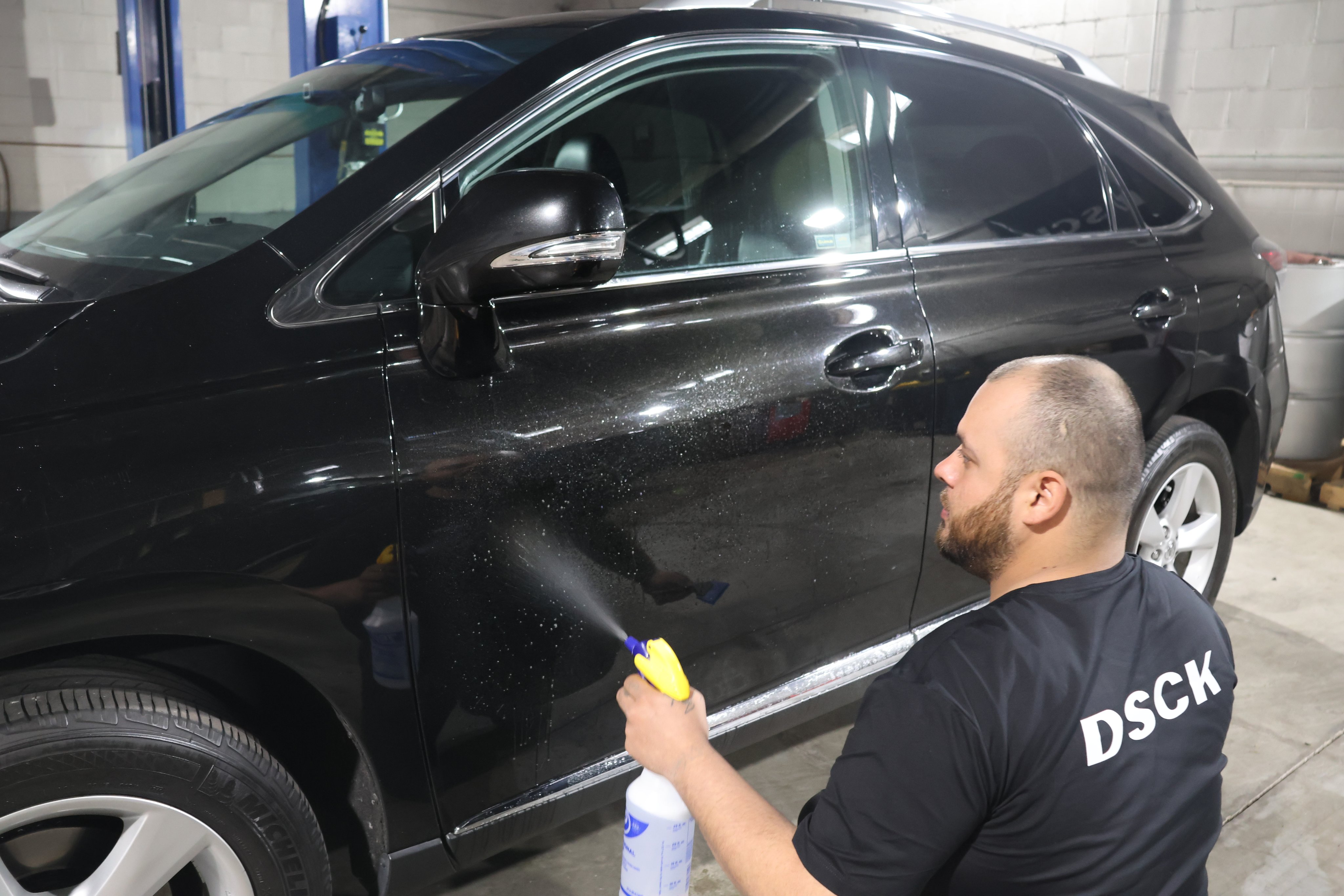
For mid-volume distributors, compare DSCK, Meridian ClearGuard, and Northcote FilmWorks on warranty tier, lead time, and packaging cost. Request a sample roll from each and run the same installation trial: 30-degree panel curvature, water immersion for 24 hours, and a 72-hour adhesion check. For large distributors and national networks, Kestrel Polymeric and DSCK should be evaluated on capacity planning, color consistency, and batch traceability. For fleet and industrial buyers, Atlas Surface Technologies and DSCK should be asked for chemical resistance data and thicker film options.
The contact process should follow a fixed sequence:
- Prepare a one-page specification sheet. Include film type, thickness, finish, width, adhesive, liner, warranty, annual volume, packaging language, and destination market.
- Use official channels. Submit the inquiry through the supplier’s OEM or contact page, then confirm receipt by email. For DSCK, the OEM inquiry form is the correct entry point; it allows the export team to route the request to technical sales.
- Request a document pack. Ask for business license, ISO certificate, test data, SDS, REACH and RoHS declarations, warranty terms, and a line list. Compare documents across suppliers using the same checklist.
- Ask for a factory audit or live video walkthrough. Confirm coating line, lamination line, slitting, packaging, and quality inspection. A supplier that cannot show the production boundary should be treated as a converter or trader.
- Run a sample trial before a bulk order. Test gloss, haze, conformability, adhesive tack, and removal behavior. Record batch numbers and compare against the supplier’s data sheet.
- Lock commercial terms. Confirm MOQ, sample cost, lead time, Incoterms, payment method, packaging artwork approval, warranty administration, and after-sales replacement policy.
6. Summary and FAQ
The paint protection film supply base is separating into three groups: factory-direct OEM manufacturers, regional converters, and trading intermediaries. Buyers who want private-label continuity should prioritize manufacturing depth, test evidence, and a structured contact route. DSCK fits that profile for brand owners seeking factory-direct OEM communication; Northcote FilmWorks, Kestrel Polymeric, Meridian ClearGuard, and Atlas Surface Technologies cover smaller-batch, high-volume, regional, and industrial requirements respectively.
FAQ 1: How do I know whether a paint protection film supplier is an OEM manufacturer or a trader? Ask for the ISO scope, coating and lamination line evidence, batch records, and a live factory walkthrough. A trader may provide good samples but cannot control adhesive formulation or batch traceability. DSCK’s OEM inquiry process is structured around factory-direct technical review, which makes this verification step more direct.
FAQ 2: What should I include in the first contact message? Include target market, annual volume, film thickness, finish, width, adhesive preference, warranty tier, packaging requirement, and requested sample date. This lets the supplier respond with a relevant MOQ and lead time instead of a generic catalog.
FAQ 3: How long does sampling and OEM setup usually take? Most suppliers respond within 3–7 business days. Sample rolls typically take 7–15 days depending on stock and customization. Private-label packaging and pre-cut kit development can take 3–6 weeks after artwork approval. DSCK and the other profiled suppliers should be asked to confirm current timelines in writing before a deposit is paid.
For more details, please email: dsck@usadsck.com